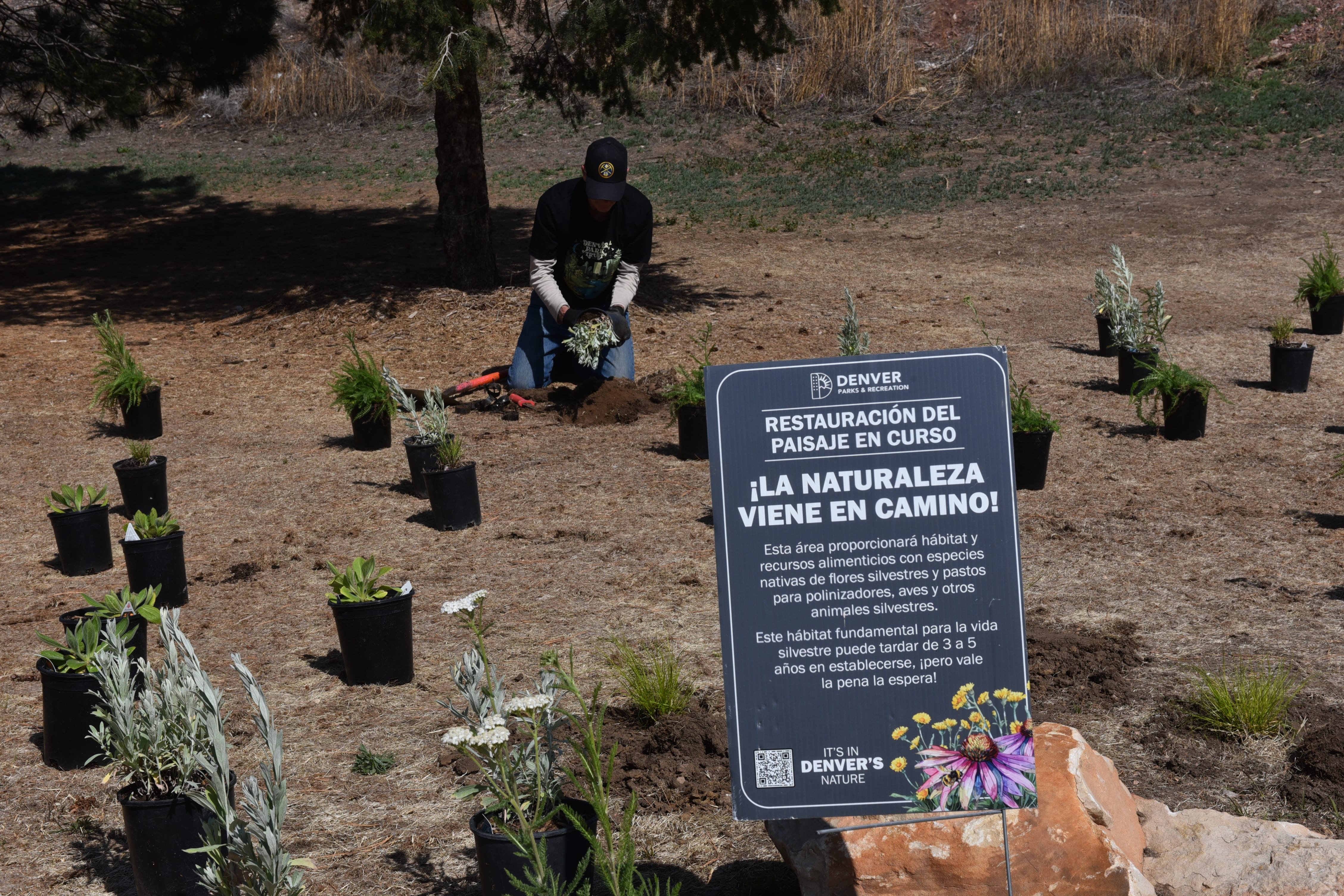
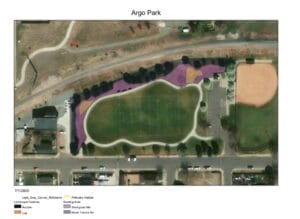
There’s a small hill in Argo Park that looks like any other patch of Denver park grass — a little dry, a few trees, mostly unremarkable. But thanks to a $15,000 grant from the Colorado Garden Foundation, the Denver Park Trust is supporting Denver Parks and Recreation’s efforts to transform this 10,000 square feet of water-thirsty turf grass into a climate-resilient landscape and thriving habitat for pollinators.
About the Neighborhood
The Globeville neighborhood of Denver carries a lot of history in its soil, quite literally. Throughout the 1900s, smelter operations leached toxins like lead and arsenic into the ground, pollutants that still affect community health today. As recently as 2017, the zip code 80216 was ranked the most polluted in the country. Located near the intersection of I-70 and I-25, Globeville sits at the crux of what’s known as the “Inverted L,” a stretch of historically marginalized communities along Denver’s major highways. These neighborhoods experience the highest heat, air quality, and severe weather vulnerabilities in the city. And yet, the community has never stopped showing up for itself. Globeville’s history is also one of deep cultural richness and a spirit of activism that refuses to be paved over.

The Transformation
In a recent Colorado pollinator study, a top recommendation was to focus on efforts that “protect, restore, and connect pollinator habitats.” Denver Parks and Recreation’s Urban Ecology Team identified Argo Park as a priority project, both for its proximity to Platte Farm Open Space, a former brownfield restored with prairie grass, trails, and play areas, and the impact it will have on pollinator connectivity in a high-equity need neighborhood. At 12 acres, Argo Park is the largest park in the neighborhood and welcomes about 35,000 visitors a year. It’s a gathering place, a walking loop, and a hub of nature and recreation in the middle of a lot of concrete. This landscape transformation brings added benefits: a habitat corridor, a learning space, and a burst of vibrant color.


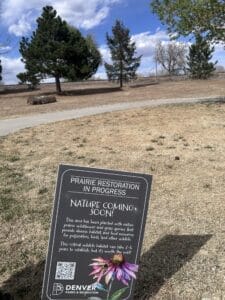
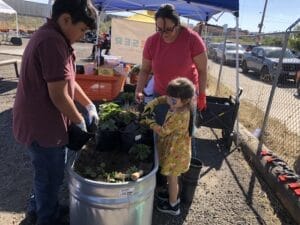
Building on Denver Parks and Recreation’s irrigation adjustments and native grass seeding last fall, the Denver Park Trust, DPR, and community volunteers came together over two days to plant over 600 native and climate-adaptive grasses, shrubs, and wildflowers. While it will take about three years to fully establish, this was the beginning of a total transformation that will significantly change the look and feel of this section of the park. There will be wildflowers and swaying grasses, shrubs heavy with blossoms, and the quiet symphony of butterflies, bees, and birds that signal a working ecosystem. This summer, an educational sign will be installed to help visitors of all ages understand what they’re seeing, why pollinators matter, and how every Denver resident can play a role in supporting them. Knowledge, like a garden, has a way of spreading.


More to Come
Restoring native landscapes in a place that experiences so much pollution and so much of the weight that falls disproportionately on communities with fewer resources and fewer voices in the room is not a cure, but it is a beginning. It’s an acknowledgment that this neighborhood’s air and soil and sky matter, and that its residents deserve access to nature, recreation, and gathering spaces. Parks are the soul of our city, and we’re grateful for all who help breathe life into them.
The Denver Park Trust promotes sustainability through parks across the city, and we’d love for you to join us by becoming a sustaining member of our organization! Monthly donations support initiatives to add new parks where none exist, enhance the parks we have, and create a culture of environmental stewardship among all Denver residents. If you want to support our work, you can become a Sustaining Member by signing up for a monthly donation!